|
Tour Itinerary
Day 0. Arrive Quito. Overnight in Hotel Sebastian.
|
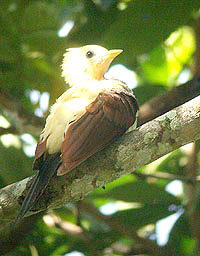
Cream-colored Woodpecker
Photo by Roger Ahlman
|
|
|
Day 1. Fly Quito to Coca, boat to lodge in amazonia
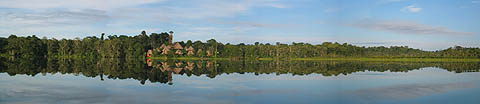
Fly to Coca, transfer to canoe for two-hour trip down the Napo River to Napo Wildlife Center or Sacha Lodge, enjoying our box lunch while watching for Cocoi and other herons, Yellow-billed Tern, Swallow-winged Puffbird and Drab Water-Tyrant. If arriving Sacha we bird the productive entrance trail through open areas and Varzea (flooded) forest followed by a short paddle in dugout canoes across the lake with wonderful views of the lake and Hoatzins, Black-capped Donacobius and Silver-beaked Tanager. If arriving NWC, we bird the Varzea forest alongside our dugout canoes during the 2 hour paddle up a small side river.
Day 2-4. Birding at Amazon lodge
Three full days to explore the best of birding at the Lodge, including: a morning in the canopy tower for breathtaking flocks of parrots, tanagers and raptors; a visit to the legendary parrot clay lick; Terra Firme forest for Reddish-winged Bare-Eye, White- plumed Antbird and many manakins; Varzea forest with chance for Cocha Antshrike, Zigzag and Agami Heron. And last but not least, birding after dinner for owls such as Black-banded Owl and possible night roosts of other birds.
|
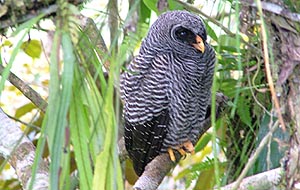
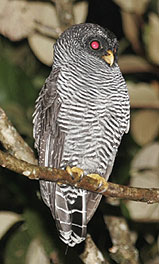
Black-banded Owl
Photo by Karin Wuertz-Schaefer
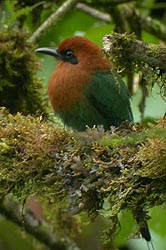
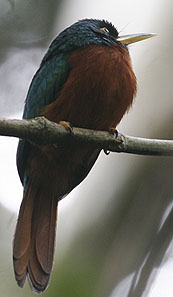
Right: Broad-billed Motmot
Photo by Charlie Vogt
|
|
|
Day 5. Amazon lodge to Wildsumaco lodge
|
Yellow-billed Jacamar
Photo by Boris Herrera
|
|
|
Depart Lodge. Leaving early in the morning, we arrive late morning in Coca, transfer to a vehicle which will take us birding the rest of the day along the lower Loreto road, looking for Blackish Rail and open country species such as Pearl Kite, White-eared Jacamar, Red-breasted Blackbird, among many others. Further on we head up into the foothills with a view over Amazonia. The Foothill zone was one of the late Ted Parker's and Paul Coopman's favorite areas to bird. We arrive at the new Wildsumaco lodge for late afternoon birding, dinner and overnight.
Day 6. Wildsumaco Lodge
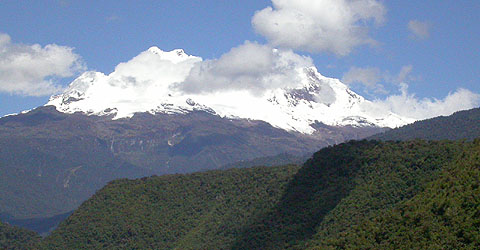
Wildsumaco Lodge located at 1500m, protects over 500 acres of subtropical rainforest and 400 bird species (the list is growing rapidly). It is nestled at the base of Sumaco volcano which rises above the Amazon basin. Here in the eastern foothills we find one of the highest diversities of bird species in the world. Some of the species we might see today include Black Hawk-Eagle, Gray-rumped Swift, Collared Trogon, Spot-breasted Woodpecker, Lafresnaye's Piculet. Regional specialties we will seek include, Striolated Puffbird, Chestnut-tipped Toucanet, Equatorial Graytail, Black-billed Treehunter, Lined Antshrike, Blackish Antbird, Short-tailed Antthrush and several species of flycatchers, for example Black-and-white Tody-Tyrant, Cliff Flycatcher and Yellow-cheeked Becard.
|
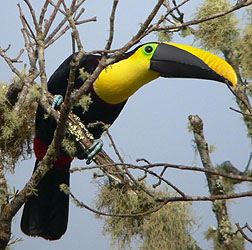
Black-mandibled Toucan
Photo by Jim Olson
|
|
|
Three beautiful cotingas are possible namely Scarlet-breasted and Fiery-throated Fruiteater as well as Amazonian Umbrellabird. Other appealing species include Blue-rumped Manakin, Musician Wren, Golden-eyed Flowerpiercer and several flashy tanagers including the spectacular Paradise as well as Yellow-throated and Orange-eared Tanager. Hummingbird feeders usually yield Many-spotted & Violet-headed Hummingbird, Ecuadorian Piedtail, Golden-tailed Sapphire, Napo Sabrewing, Grey-chinned Hermit, Fork-tailed Woodnymph, as well as Green & Sparkling Violetear.
At night we shall try for Tropical, Rufescent & Foothill Screech-Owl and the local Band-bellied Owl. Blackish Nightjar is also possible. Dinner and overnight at Wildsumaco Lodge.
Day 7. Wildsumaco
Today we continue looking for more foothill specialties such as Rufous-naped Greenlet, the recently described Foothill Elaenia, Yellow-breasted Antwren and Gray-mantled Wren (which often accompanies mixed species flocks high in the canopy) Streaked Xenops, Red-billed & Ecuadorian Tyrranulet, Lemon-browed Flycatcher and the rare White-fronted Tyrannulet. Sometimes a Black Hawk-Eagle soars high above the forest, loud flocks of Military Macaws row by or Maroon-tailed Parakeets flash through the mid-canopy. Just new to the list is the extremely rare Andean Laniisoma and Straw-backed Tanager, the latter is a 220km northern range extension. A number of "outlying ridge" species known from the far southeast Cordillera del Condor and Cutucú have been recently discovered in the area and more will appear...!
Overnight Wildsumaco.
Day 8. Wildsumaco to Cabañas San Isidro.
In the morning we cleanup around the lodge We shall look for White-tipped Sicklebill, Booted Racket-tail, Wire-crested Thorntail, Greenish Puffleg, the near endemic Coppery-chested Jacamar, Black-streaked Puffbird, Rufous-rumped Antwren, Golden-winged Manakin, Gray-mantled Wren, Later we take our box lunches birding on the Loreto road and Guacamayos ridge looking for White-tailed Hillstar, Variegated Bristle-Tyrant, the rare Olivaceous Piha, Chestnut-bellied Thrush, Vermilion Tanager, and a chance on the very rare White-rimmed Brush-Finch.. We arrive for dinner at the famous Cabañas San Isidro for a delicious dinner and overnight. This is a privately owned lodge, located at 2000m, with almost 1200 hectares of protected land and a birdlist of over 300 species.
At night we shall look for Rufous-banded Owl and a high elevation Black-banded Owl that might be new species, the San Isidro Owl!
|
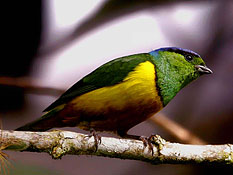
Chestnut-breasted Chlorophonia
Photo by Patricio Herrera
San Isidro Owl
Photo by Boris Herrera
|
|
|
Day 9. San Isidro
We return early morning to Guacamayos ridge trail for Scaly-naped Amazon, Slate-crowned and White-bellied Antpitta, Barred Antthrush, Rufous-headed Pygmy-Tyrant, Slaty-backed Chat-Tyrant, Flammulated Treehunter, Sickle-winged Guan, White-throated Quail-Dove, and with a lot of luck, White-faced Nunbird and Greater Scythebill.
Afternoon around the lodge we look for some specialties that include White-capped Parrot, Barred Parakeet, Powerful and Yellow-vented Woodpecker, Highland Motmot, Crested and Golden-headed Quetzal, Black-billed Mountain-Toucan, Rusty-winged and Spotted Barbtail, Streaked Tuftedcheek, Striped Treehunter, the beautiful Rufous-crowned Tody-Flycatcher, Bronze-olive Pygmy-Tyrant, Handsome and Pale-edged Flycatcher, the rare Dusky Piha, a lek of Andean Cock-of-the-Rock, Inca Jay, Black-billed Peppershrike, Chestnut-breasted Chlorophonia, several gorgeous Tanagers as well as Subtropical and Yellow-billed Cacique.
Around dusk we can go for Lyre-tailed and Band-winged Nightjar, and White-throated Screech-Owl.
|
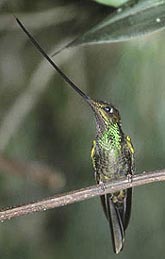
Swordbill
Photo by Donald Rehn
|
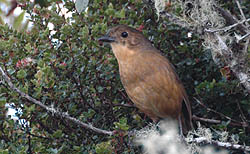
Tawny Antpitta
Photo by Janos Olah Jr.
|
|
|
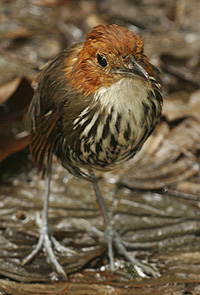
Chestnut-crowned Antpitta
Photo by Candy MacManiman
|
|
|
Day 10. San Isidro to Guango Lodge
After breakfast we pause to see if the habituated Chestnut-crowned and White-bellied Antpittas will appear for their feeding. Then birding along the road and their varied forest trails looking for birds we missed yesterday. Later we will check the feeders for Fawn-breasted Brilliant, Chestnut-breasted Coronet, Long-tailed Sylph, Bronzy Inca, Tawny-bellied Hermit.
We depart San Isidro, birding along the Baeza by-pass, a tranquil side road which often sports brilliant tanager flocks and has provided interesting sightings including many altitude records for Amazonian species that have moved upslope following deforestation. We arrive before dinner at Guango Lodge situated at 2700m which maintains a beautiful garden with many flowers and feeders for Hummingbirds. Up to 12 species can be seen in one day and this must be the best place in the world to see Sword-billed Hummingbird. Other special hummers here include the very rare Mountain Avocetbill, Tourmaline Sunangel, Glowing and Golden-breasted Puffleg. At dusk we will look for Rufous-bellied Nighthawk.
Night at Guango Lodge.
|
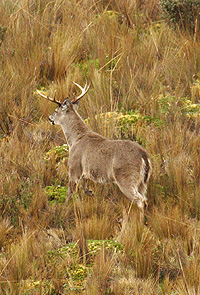
White-tailed Deer
Photo by Candy MacManiman
|
|
|
Day 11. Early-morning birding around Guango among diverse habitats, i.e. cloudforest, chusquea bamboo and a fast flowing river. Here we can see Torrent Duck, Masked Trogon, Turquoise Jay, with luck the rare Gray-breasted Mountain-Toucan, Bar-bellied Woodpecker, Barred Becard, Plain-tailed Wren, White-capped Dipper, Blue-backed and Capped Conebill, Buff-breasted Mountain-Tanager, the beautiful Plushcap as well as Northern Mountain-Cacique. A visit above the Papallacta hot springs will give us a chance at Viridian Metaltail, Agile Tit-Tyrant, Black-chested, Lacrimose, Scarlet-bellied Mountain-Tanager and with heaps of luck, Masked Mountain Tanager. We will ascend Papallacta pass and visit a stand of Polylepis forest for Giant Conebill, Black-backed Bush-Tanager and Páramo Tapaculo. Behind the forest at a distance there is a beautiful lake in which Silvery Grebe, Andean Coot, Andean Ruddy-Duck and Andean Teal can be found. At the pass and above we will search for páramo specialties like the Rufous-bellied Seedsnipe, with luck Andean Snipe, Caranculated Caracara, Ecuadorian Hillstar, Blue-mantled Thornbill, Stout-billed Cinclodes, Andean Tit-Spinetail, Many-striped Canastero, White-chinned Thistletail, Tawny Antpitta, the rare Red-rumped Bush-Tyrant, Páramo Ground-Tyrant, Grass Wren and with good weather, a chance of Andean Condor! We arrive at hotel Sebastian in Quito before dinner.
|
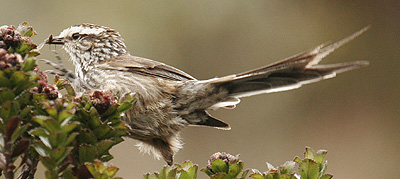
Andean Tit-Spinetail
Photo by Candy MacManiman
|
|
|
|
Day 12. Transfer to airport for international flight home.
 Back to top Back to top
Tour Information
Price per person: Click here for prices
Included: All lodging, meals, expert bilingual birdguide, transportation, hotel transfer and entrance fees.
Not included: Last night dinner; drinks; tips.
See our Payment and Cancellation Policy page for important information.
|
|