|
Tour Itinerary
Day 0. Arrive Guayaquil, overnight Grand Hotel Guayaquil.
Day 1. Manglares Churute to Buenaventura.
We start the early morning birding Cerro Blanco for our first Tumbesians; Scrub Nightjar, Necklaced Spinetail, Collared Antshrike (ssp. Bernardi), Gray-breasted Flycatcher. Nearby at Puerto Hondo we try for Rufous-necked Wood-Rail. Later along roadside marshes east of Guayaquil looking for herons, egrets, Black-bellied Whistling-Ducks, Least Grebe, Snail Kite, Savanna Hawk, Wattled Jacana, White-throated Crake, Masked Water-Tyrant and Peruvian Meadowlark. Later at Manglares Churute we scope for Horned Screamers at lake Canclón surrounded by marshes and dry forest. Afternoon drive to Buenaventura close to Piñas where we will stay 2 nights at the Umbrellabird Lodge. We make a stop at the Santa Rosa marshes on the way looking for more herons, waterbirds and waders.
Overnight Buenaventura.
|
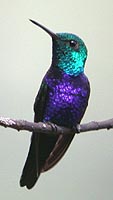
Violet-bellied Hummingbird
Photo by Bob Pease
|
|
|
Day 2. Buenaventura all day.
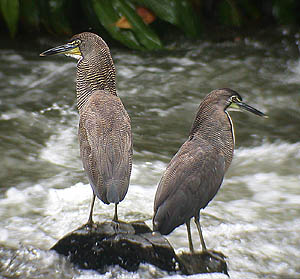
Lush and clad with epiphytes, the foothill rainforest here is in stark contrast to the arid region we visited before. Situated between 600-1200m, Buenaventura reserve is home to some of the country's most threatened species due to severe deforestation in western Ecuador. Owned by the Jocotoco Foundation, this reserve is one of few protected forests left in the region. We will visit a nearby lek of the spectacular Long-wattled Umbrellabird and Club-winged Manakin both Chocó endemics. At certain times of the year (usually Oct-Dec) the endangered Umbrellabird will put on a full show by opening his head umbrella and erecting the wattle feathers, producing the most impressive avian display I have seen in the Americas. Up the road or on a forest path we might encounter the rare Brownish Twistwing and hear the Plain-backed Antpitta (the most difficult Antpitta to see). Later on we will scan for the endangered Tumbesian endemic Gray-backed Hawk and the rare Solitary Eagle among the plentiful kettles of Swallow-tailed Kites. Above on the back side of the ridge we might catch a Fasciated Tiger-Heron on our quest for the other endangered endemic the El Oro Parakeet. With luck we will see them foraging or on nest boxes which have decreased the level of nestling predation by Crimson-rumped Toucanets.
|
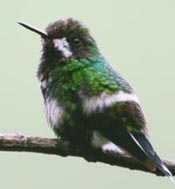
Green Thorntail
Photo by Bob Pease
|
|
|
Overnight Buenaventura.
Day 3. Buenaventura to Arenillas, Alamor, El Empalme and Jorupe
In the morning the hummingbird feeders are a frenzy of activity with Green Thorntail, White-necked Jacobin, Rufous-tailed Hummingbird, Green-crowned and Fawn-breasted Brilliant, Andean Emerald, Brown and Sparkling Violetear, Purple-bibbed Whitetip and the occasional White-vented Plumeleteer, Emerald-bellied Woodnymph, and Long-billed Starthroat. The endangered Tumbesian Rufous-headed Chachalaca come brazenly to the fruit feeders along with wild Coatis which even scamper across the dining hall floor! Brown-billed Scythebill, Pacific Tuftedcheek, Uniform Treehunter, the endemic El Oro Tapaculo, Rufous-winged Tyrannulet,
|
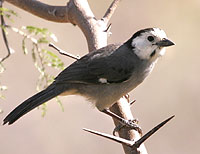
White-headed Brush-Finch
Photo by Patricio Herrera
|
|
|
Ochraceous Attila, Whiskered and Song Wren, Pale-vented Thrush, probably what seems to be Speckled Tanager (not seen anywhere else in Ecuador but not yet collected!), Rufous-throated Tanager and Tricolored Brush-Finch.
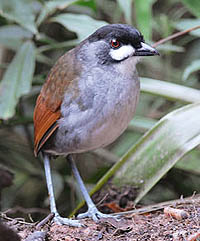
We set off with a box lunch driving to Arenillas, Alamor and El Empalme. Returning to the Tumbesian region we search for Tumbes Swift, White-headed, White-winged and Bay-crowned Brush-Finch. Arriving at the new Urraca Lodge at
Jorupe Reserve for dinner.
Overnight Jorupe.
 Back to top Back to top
Day 4. Jorupe all day
Comfortably based in Jorupe we can spend the entire day birding for the Tumbesians and local specialties including Gray-capped Cuckoo, Ochre-bellied Dove, Ecuadorian Piculet, Blackish-headed Spinetail,
|
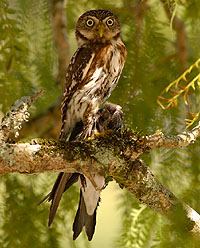
Pacific Pygmy-Owl
Photo by Peter Oxford
|
|
|
Henna-hooded and Rufous-necked Foliage-gleaner, Watkin's Antpitta, Yellow-olive Flatbill, Tumbes Pewee, Sooty-crowned and Gray-breasted Flycatcher and Slaty Becard. Playing the Pacific Pygmy-Owl during a lull invariably stirs up the neighborhood with a mixed flock of mobsters including Tropical Gnatcatcher, White-tailed Jay, Plumbeous-backed Thrush and Crimson-breasted Finch. For more color, add Yellow-tailed and White-edged Oriole. In the evening we have a leisurely 3 nights to bag the West Peruvian (Tumbes) Screech-Owl.
Overnight Jorupe.
Day 5. Jorupe to Zapotillo.
We continue exploring the area and then bird our way towards Zapotillo, through gently rolling landscapes that are a brilliant green now during the rainy season. Forest patches interspersed with agricultural lands and as we approach Zapotillo, we bird through deciduous scrub and desert-like areas. Many raptors abound here and we are on the look out for Hook-billed Kite,
|
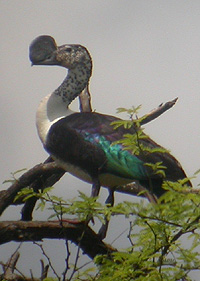
Comb Duck
Photo by Charlie Vogt
|
|
|
Gray Hawk, Laughing Falcon and Northern Crested-Caracara. Also more chances for Tumbes Swift, Slaty Becard and Saffron Siskin.
The very dry areas around Zapotillo often holds both Tumbes Swallow and Tumbes Hummingbird. A nearby marsh often has a population of Comb Ducks, at la Ceiba reserve owned by Nature & Culture International we get more chances for Blackish-headed Spinetail and Elegant Crescentchest. Later we bird our way slowly back looking at Red-masked Parakeet, Groove-billed Ani, Striped Cuckoo, Streak-headed Woodcreeper, Pacific Elaenia, Tawny-crowned Pygmy-Tyrant, Baird's Flycatcher, Superciliated Wren, and Saffron Finch.
Overnight Jorupe.
Day 6. Jorupe, Sozoranga, Utuana to Vilcabamba
From Jorupe we head east and uphill to Sozoranga, Around the main plaza in Sozoranga a colony of Chestnut-collared Swallows have found their haven under the church roof. Just outside this pleasant village small patches of
|
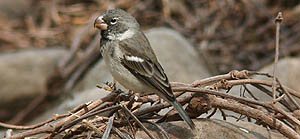
Male Parrot-billed Seedeater
Photo by Roger Ahlman
|
|
|
forest still cling to the hillsides and we will be welcomed by a rich dawn chorus. Targets here include the Gray-chinned Hermit which might be split to Porculla Hermit, a good chance of the rare Little Woodstar, the rare and local Andean Slaty-Thrush, and the metallic sounding Black-and-white Tanager.
Still early before the fog rolls in, we drive to nearby Utuana. Three specialties are found here and hardly anywhere else in Ecuador; Rusty-breasted Antpitta, Black-crested Tit-Tyrant and Piura Hemispingus. We will also
|
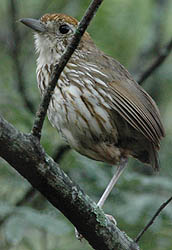
Watkins Antpitta
Photo by Janos Olah Jr.
|
|
|
concentrate on the following, many of them rare and difficult elsewhere; Andean Tinamou, Rainbow Starfrontlet, Purple-throated Sunangel, Line-cheeked Spinetail, Chapman's Antshrike, Gray-headed Antbird, Loja Tyrannulet, Jelski's Chat-Tyrant and Black-cowled Saltator.
Later we continue towards Loja and Vilcabamba making several stops along the road birding for a subspecies of Amazilia Hummingbird (a.k.a. Loja Hummingird), Three-banded Warbler, another chance for Andean Slaty-Thrush, Rufous-naped Brush-Finch and Tumbes Sparrow as well as Parrot-billed and Drab Seedeater. On the outskirts of Vilcabamba we have a good chance for Plumbeous Rail.
Overnight Hosteria Vilcabamba.
Day 7. Podocarpus National Park to Tapichalaca.
As we enter the temperate forest of Cajanuma at 2800m we search carefully for the rare Bearded Guan, near-endemic to Ecuador, as well as Scaly-naped Amazon, Highland Trogon, Turquoise Jay, Crimson-mantled Woodpecker, Pearled Treerunner. In the bamboo, we try for and Chusquea Tapaculo, Plain-tailed Wren and Plushcap. Amidst the mixed flocks some beautiful Tangara tanagers like Saffron-crowned and Blue-and-black; four gaudy Mountain-Tanagers, Scarlet-bellied, Lacrimose, Hooded and Buff-breasted; the eye-popping Grass-green Tanager, Gray-hooded Bush-Tanager and Black-headed Hemispingus.
Other possiblilities include Tawny-brested Tinamou, Black-and-chestnut Eagle, White-throated Quail-Dove, Gray-breasted Mountain-Toucan, Orange-banded Flycatcher, Barred Fruiteater, Chestnut-breasted Chlorophonia, Red-hooded Tanager and Yellow-billed Cacique.
In the afternoon we bird our way south to Quebrada Honda staying 2 nights at the comfortable Casa Simpson Lodge at Tapichalaca Reserve.
Day 8. Tapichalaca to Zamora
Quebrada Honda became famous when Robert Ridgely discovered a remarkable new species of Grallaria; the Jocotoco Antpitta.
|
White-capped Tanager
Photo by Roger Ahlman
|
|
|
The foundation was started soon after and now protects 8 forest reserves around Ecuador which harbor many highly endangered and endemic species. We start the first morning birding the Quebrada trail towards the feeding area for the amazing Jocotoco Antpitta which is now habituated. Along the trail we listen for Golden-plumed Parakeet, Andean Pygmy-Owl and try for Chusquea Tapaculo as well as Orange-banded Flycatcher. Back at the lodge around the feeders we get White-bellied Woodstar, Shining Sunbeam, Mountain Velvetbreast, Glowing Puffleg, Tyrian Metaltail, the local Rufous-capped Thornbill and Amethyst-throated Sunangel. Other birds that we might see are White-capped Parrot,
|
Jocotoco Antpitta
Photo by Roger Ahlman
|
|
|
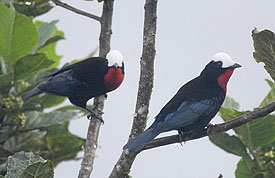
Powerful Woodpecker, Crested Quetzal, Emerald Toucanet, Bar-bellied Woodpecker, Strong-billed Woodcreeper, Streaked Tuftedcheek, Uniform Antshrike, Blackish Tapaculo, Tawny-rumped Tyrannulet, Rufous-breasted Chat-Tyrant, also two outstanding Tanagers; the radiant Golden-crowned Tanager and the rare White-capped Tanger.
After lunch we head downslope towards Valladolid and beyond for numerous Marañon endemics and specialties including Marañon Spinetail, Marañon Thrush, Buff-bellied Tanager, Red-crested Finch, Rufous-fronted Thornbird. Last visit I had Straw-backed Tanager (only the second time I had seen it) and Blue-naped Chlorophonia which was new for the Tapichalaca list. Overnight Tapichalaca.
Overnight Tapichalaca.
Back to top
|
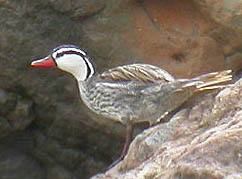
Torrent Duck
Photo by Charlie Vogt
|
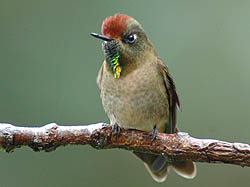
Rufous-capped Thormbill
Photo by Janos Olah Jr.
|
|
Day 9. Zamora to Yankuam
We start early on the road to Yankuam stopping for Bluish-fronted Jacamar, a recent new species for Ecuador. We continue birding the road to the Lodge and the new road beyond where many rare and range-restricted species have been found recently. Orange-throated Tanager, endemic to this mountain range is relatively easy to find here. Other birds to look for include Zimmer's Antbird, Sharpbill, Blackish Pewee, White-bellied Pygmy-Tyrant, White-throated Woodpecker, Rufous-tailed Foliage-Gleaner, Rufous-winged Antwren, Striolated Puffbird, Black-and-white Hawk-Eagle, Amazonian Umbrellabird, Fiery-throated Fruiteater and others. As the altitude here is 800-1000 m we get a number of upper Amazonian species.
Overnight Yankuam.
Day 10. All day Yankuam for Orange-throated Tanager and others.
|
Fasciated Tiger-heron
Photo by Roger Ahlman
|
|
|
Another morning in this very birdy area to look for things we didn't see yesterday. We also explore more secondary habitat for birds like Bamboo Foliage-Gleaner, Streak-chested Antwren, White-browed Antbird, Purplish Jacamar and Black-billed Seed-Finch. Also good chances on some gorgeous but uncommon Tanagers like Golden-collared Honeycreeper, Blue-browed, Rufous-crested and Vermilion Tanager as well Yellow-whiskered Bush-Tanager. Overnight Yankuam.
Day 11. Yankuam to Copalinga
Morning birding around Yankuam to clean up or get better views of target birds. We leave after lunch for Zamora and arrive for dinner and 2 nights at Copalinga Lodge, owned by a Belgian couple it is the best designed lodge for birders around.
Overnight Copalinga Lodge.
Day 12. Bombuscaro.
We explore one of the richest habitats on earth; the eastern foothills of the Andes. Several threatened species are harbored in these forests of Podocarpus National Park and three are near-endemics to Ecuador; the beautiful White-breasted Parakeet, Coppery-chested Jacamar and Foothill Elaenia; a recently described species from this locality. Birding the park entrance trail in the morning we look for extraordinary birds as Spot-winged Parrotlet, Black-streaked Puffbird, Lanceolated Monklet, Equatorial Graytail, Black-billed Treehunter, Sharp-tailed Streamcreeper, White-streaked Antvireo, Rufous-rumped Antwren. as well as Chestnut-capped Brush-Finch and Orange-billed Sparrow.
|
Coppery-chested Jacamar
Photo by Boris Herrera
|
|
|
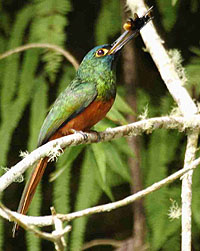
In the forest we bird for treats such as Plain-backed Antpitta, Chestnut-crowned Gnateater, White-crowned Tapaculo, Marble-faced Bristle-Tyrant, Orange-crested Flycatcher, chance on the spectacular Amazonian Umbrellabird, Blue-rumped Manakin, Gray-mantled Wren, Slaty-capped Shrike-Vireo, Spotted Nightingale-Thrush and Bronze-green Euphonia.
Around the feeders of Copalinga several species of hummingbirds come and visit, which are normally quiet difficult to see in these dense forests; Violet-fronted and Black-throated Brilliant, Green Hermit, and on the Verbena hedges the little-known Spangled Coquette, Wire-crested Thorntail and Amethyst-throated Woodstar.
After lunch we may road bird the abandoned airstrip below Zamora for a relaxing afternoon of easy open country birding with many Amazon species to fill a scope. We'll finish this rich day with some owling as several nightbirds can be seen here; Band-bellied Owl, Rufescent Screech-Owl as well as Blackish Nightjar.
Overnight Copalinga Lodge.
Back to top
Day 13. Old Loja - Zamora Road to Saraguro.
In the morning we road bird especially for mixed flocks searching for Foothill Elaenia, Red-billed and Ecuadorian Tyrannulet as well as Equatorial Graytail and Spectacled Prickletail. The lower canopy allows us eye-level views of flashy tanager flocks with better chances of Paradise Tanager but also Green-and-gold, Golden-eared, Yellow-bellied and Spotted Tanager. We overnight at a basic hotel Hosteria San Pedro in Saraguro to give us better chances on the local specialties.
|
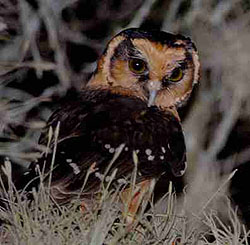
Buff-fronted Owl
Photo by Roger Ahlman
|
|
|
Day 14. Saraguro to Giron..
Early morning we visit the forest of Huashipampa, just outside Saraguro. Here we have a possibility to see the endangered Red-faced Parrot. The forest above is good for Cresent-faced Antpitta as well as other temperate forest species like Rainbow-bearded Thornbill, Andean Pygmy-Owl, Orange-banded Flycatcher, Golden-crowned Tanager to mention some. Masked Mountain-Tanager and Chestnut-bellied Cotinga have been seen here.As we head further north we shall look for Mountain Caracara, Black-winged Ground-Dove, the endangered White-tailed Shrike-Tyrant, White-browed Chat-Tyrant and the Azuay race of Streak-backed Canastero.
Overnight Hotel Sol y Agua, Santa Isabel west of Giron.
Day 15. El Cajas National Park to Guayaquil.
The morning's target is a rare Tumbesian endemic and one of the world's most endangered species, the Pale-headed Brush-Finch. Rediscovered here by Niels Krabbe, this is the only known population of this Ecuadorian endemic which now numbers around 120 pairs.
|
Pale-headed Brush-Finch
Photo by Janos Olah Jr.
|
|
|
Yunguilla reserve which protects 94% of the species population, is owned by the Jocotoco Foundation. Also present are Pacific Elaenia, Drab Seedeater, Rufous-chested Tanager and a chance of Buff-fronted Owl.
In the mid-morning we head to Cuenca. Just west of Ecuador's 3rd biggest city lies El Cajas National Park. Sculpted by Pleistocene glaciers, the landscape is decorated with kettle lakes surrounded by rounded hills and steep cliffs. In the elfin treeline forest, the Violet-throated Metaltail a small hummingbird, has evolved here and is found nowhere else in the world. Other birds of interest are Ecuadorian Rail, Andean Ruddy-Duck, Andean Gull, Andean Pygmy-Owl, Blue-mantled and Rainbow-bearded Thornbill, Stout-billed Cinclodes, Andean Tit-Spinetail.
Overnight Hosteria Duran, a beautiful peaceful, hotel outside of Cuenca.
Day 16. El Cajas National Park to Guayaquil.
We pack up and return to Cajas for more chances on the birds above as well as Red-rumped Bush-Tyrant, Giant Conebill and the unique Tit-like Dacnis. We continue birding downslope past Molleturo and arrive for dinner in Guayaquil.
Overnight Grand Hotel Guayaquil.
Tour Information
Price per person: Click here for prices
Included: All lodging, meals, expert bilingual birdguide, transportation, hotel transfer and entrance fees.
Not included: Last night dinner; drinks; tips.
See our Payment and Cancellation Policy page for important information.
|
|